

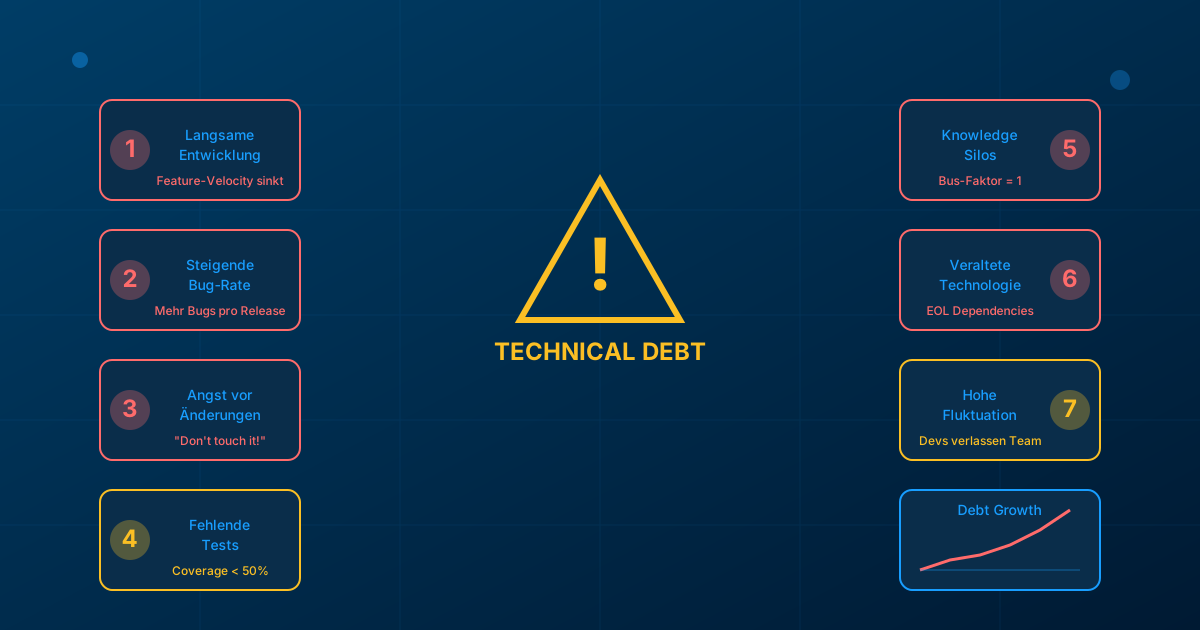
Technical debt is like real debt - it accumulates interest. What seems like a "quick fix" today costs double the development time tomorrow. Here are 7 warning signs that show your code urgently needs attention.
1. "Nobody touches that anymore"
When developers avoid certain code areas, that's an alarm signal. Typical statements:
- "The old developer wrote that, nobody knows how it works"
- "Don't touch it, everything will break"
- "That should be rewritten, but there's no time"
These "No-Go-Zones" in the code grow larger and more dangerous over time.
2. Changes take disproportionately long
A simple text change should take minutes, not days. When even small adjustments are complex, it's usually due to:
- Missing modularity (everything depends on everything)
- Lack of tests (every change is a risk)
- Unclear architecture (where do I even need to change?)
3. No or outdated tests
According to Michael Feathers' definition: Code without tests is legacy code. Period.
Typical symptoms:
- Test suite doesn't pass anymore
- Tests were commented out "because they were annoying"
- Test coverage under 20%
4. Copy-paste everywhere
When you find the same code in multiple places, that's a DRY violation (Don't Repeat Yourself). This means:
- Bug fixes must be made in multiple places
- Inconsistencies creep in
- Refactoring becomes exponentially more complex
5. Outdated Dependencies
Check your dependencies. When your PHP version, framework version, or packages are years old:
Risk Indicators
- PHP 7.x or older (8.0+ is standard)
- Symfony 4.x or older (6.x/7.x current)
- Laravel 8.x or older (11.x current)
- Packages with known CVEs
6. Deployment is an event
When releases require extensive planning, weekend deployments, or "that one colleague" must be present - something is wrong.
Modern software should be deployable daily without anyone getting nervous.
7. Documentation doesn't exist or lies
Outdated documentation is worse than none. When README, API docs, or architecture diagrams don't match the code, they mislead developers.
What to do about technical debt?
The good news: Technical debt can be managed. The first step is always an objective assessment:
- Inventory: Where are the biggest problem areas?
- Prioritization: What causes the most pain?
- Roadmap: How do we integrate refactoring into feature development?
A professional architecture audit helps you quantify technical debt and develop a clear roadmap. A Fractional Tech Lead can guide this process strategically.
Practical Tip
Reserve 20% of each sprint for technical improvements. This prevents debt from growing further while you continue delivering features.
Conclusion
Technical debt is not an IT problem - it's a business problem. Every hour developers spend on workarounds is an hour not invested in new features.
If you recognize several of these warning signs in your project, an architecture audit is the right first step. For complex legacy systems, a strategic modernization may be necessary - learn how the Strangler Pattern helps in our Legacy Modernization Guide.
Free Technical Debt Assessment
Do you recognize these warning signs in your codebase? Let's discuss how to systematically reduce your technical debt.